30 minutes. We map where your money and hours actually go — and you'll have seen the full anatomy of a real system before we ever talk numbers.
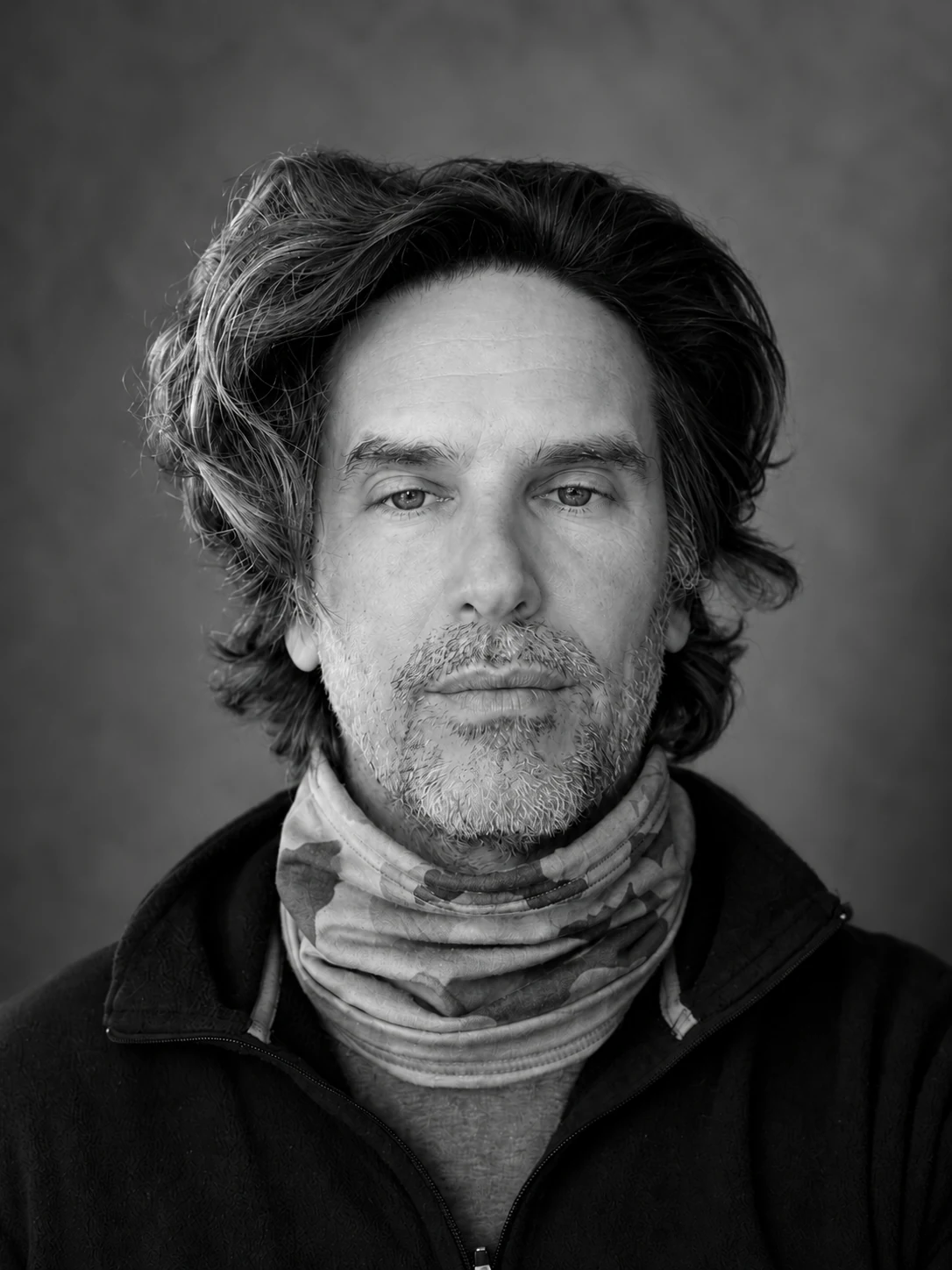
I'm Jose Rementeria. I spent twenty-plus years on the agency side — creative director, and for eleven of those years founder and chief of my own full-service agency. I know exactly what you're paying for, because I used to charge for it. Now I build that entire function inside companies: an AI-operated marketing department — brand, creative, content, funnels — run by your people, held to agency standards, directed by you.
One voice, everywhere.Every channel sounds like the same brand.
Nothing ships without your yes.Every piece waits for your approval.
Compliance-safe by design.Built where regulators read every word.
02 / Two doors
Two kinds of people arrive here.
01
The founder who IS the department.
Every caption, every email, every page waits for your eyes — because every time you handed the brand to someone else, the standard slipped. You're the bottleneck on purpose: your eyes are the only quality control that has never failed you.
Then AI made everything faster to produce and just as risky to ship. Speed was never your problem. Trust was.
02
The executive who HAS a department.
You run a team, probably an agency retainer on top of it, and a mandate that now includes AI. The tools are bought. The team is good. And somehow the output is still slower than the market, the retainer still renews, and “our AI strategy” is still a slide, not a system.
You don't need another vendor. You need your department re-platformed.
Same disease, both doors: you're renting standards instead of owning the machine that holds them.
Tools don't hold standards. Systems do.
03 / What I build
An in-house agency where most of the departments are AI.
Definition / Brand OS
An AI-operated brand system — a Brand OS — is an organization, not a tool: an org chart where most of the departments are AI, every department works from one governed source of truth, human approval gates sit above anything that needs judgment, and one person directs the whole thing. Everything below the gates runs. Everything above them is you.
Human direction
You — the director
Final judgment stays human.
Approval gatesNothing ships without a yes
01
Strategy & positioning
AI02
Identity & visual system
AI03
Art direction
AI04
Copy & editorial voice
AI05
Campaigns & advertising
AI06
Content engine & calendar
AI07
Funnel architecture
AI08
Web design & build
AI09
SEO & AI-answer optimization
AI10
Marketing ops & automation
AI
One governed source of truth
strategy · voice · visual system · files · rules
Look at the departments and you'll recognize them — they're an agency's departments. The difference is where they live and who owns them. An agency rents you those departments by the hour, forever. I build them inside your company — staffed by AI, governed by rules written down, operated by your people.
Twenty-plus years directing brand and advertising for global consumer brands — beverage, automotive, CPG, travel, consumer electronics. That career taught me what a locked identity is, what on-voice sounds like, and why the third-best headline never ships.
02
The agency founder
For eleven years I founded and ran Brainswitch Advertising Inc., a full-service agency — advertising strategy for major brands, rebranding programs, integrated campaigns. I didn't just make the work; I ran the business that sold it: client accounts, budgets, and ROI. Contracts, scopes, and what they hide. When I audit your marketing operation, I'm reading it as someone who has run one.
03
The AI architect
The last several years, building what the first twenty prepared me for: brand organizations where most of the staff is AI — in live production, in the hardest category I could have picked. Retrained for it formally too — Master of AI for Creative Directors (2024).
A strategist who can't art-direct ships ugly. An art director who can't read a P&L ships expensive. A technologist who's never run a brand ships slop at scale. This works because it's one person who has done all three.
05 / Proof
Proven where a wrong sentence is a compliance event.
I built it inside a multi-brand group in regulated categories, as contracted AI architect and brand director — where an off-brand post isn't embarrassing, it's reportable.
01
Four companies, one director
Medicare-regulated home health, private-pay precision medicine, therapy services, telehealth: four brands directed simultaneously.
02
A 13-workspace AI organization
In live production: dedicated AI departments for marketing, sales, operations, web, finance, and HR, on one governed infrastructure.
03
~20 hours a week
One human director; one human operations director trained into the system.
04
The offline stress test
The content engine deliberately planned, produced, and published on-brand while I was fully offline. That was the test. It passed.
If it holds under regulators, it holds in your industry.
My clients' systems stay closed — that confidentiality is part of what they bought, and yours would be too. So I did what architects do: I published the drawings.
Wherever your brand is, the machine meets it there.
01
Starting new
The brand is born operated.
No brand yet — or one too young to defend. The system's strategy and identity departments run first: positioning argued, identity locked, voice written down. Then the machine is built around a brand that was designed to be run, not just admired.
02
Migrating
Your brand, written into law.
The brand works; the operation doesn't scale past you. Nothing gets redesigned — your standards get codified: voice, visual system, claims rules captured as the governed source of truth, then the machine wrapped around them. The transition's test is simple: the output should be indistinguishable from your best day.
03
Rebranding
Rebuilt, then re-platformed.
The brand needs to change — reposition, revamp, or outgrow its own skin. Strategy and identity get rebuilt the way an agency would do it, with one difference: the new brand ships as an operating system, not a PDF. The maintenance is the system.
You don't have to know which one you are. That's the Blueprint's first job.
06 / The Record
Twenty years of strategy. Described as strategy.
Most portfolios show you the posters. The Record tells you the decisions — the business problem, the strategic call, what shipped because of it. The case files are open on request.
Three doors, one direction: a system your company owns, running without me. Numbers live in the conversation, not on the page.
01
2–3 weeks
The Blueprint
The complete architecture of your AI-operated organization. I audit the brand, the funnel, the content operation, the retainer if you have one, and where your hours actually go — and I tell you which starting point you're actually at: new build, migration, or rebrand, and in what order to build. Fixed scope. Useful even if we never speak again.
02
8–12 weeks
The Install
I build it. Then I hand you the keys. Workspace organization, content and publishing engine, funnel architecture, governance — and your people, trained: an operator to run it, a director to command it. Nothing ships without a human until you decide otherwise. Done when it runs a full cycle without me.
03
Monthly · capped at three companies
Fractional Direction
A director's eye, a few hours a week. For installed systems that want ongoing direction on quality, strategy, and evolution. The cap isn't scarcity theater — it's how the model works.
08 / Fit
A fit, or not — quickly.
This works if you:
run or direct marketing at a company doing roughly $1M–$20M, founder-led or department-led, especially in a trust-critical category;
are about to renew an agency retainer and would rather own than rent;
have a team you'd promote into directors, or no team and a standard you refuse to lower;
want your hours back more than you want another vendor.
This isn't for you if you:
want a cheap automation freelancer or one more magic tool;
want an agency to take it all off your plate forever — that's the dependency I build you out of;
aren't willing to let a system earn your trust one gate at a time.
09 / About
The person at the top of the org chart.
Jose Rementeria. Twenty-plus years in brand and advertising — associate creative director at a communications agency, eleven years founder and chief of his own full-service agency, Gold ADDY winner — now founder of Rementeria Inc.
I built this model for my own life first: it's how I direct four companies in about twenty hours a week. Then founders started asking how, and executives started asking whether their teams could run one. This site is the answer to both.
10 / Straight answers
What you should ask before we talk.
01What is an AI-operated brand system?+
An org chart where most departments are AI — each with a defined job, one governed source of truth, and human approval gates where judgment matters. One person directs it instead of managing a department.
02Is this different from hiring an agency?+
Yes — structurally. An agency rents you its departments forever; I build those departments inside your company, then leave. Every engagement is scoped to end: the Install is finished when the system runs a full cycle without me.
03I already have a marketing team. What happens to them?+
They get promoted, functionally. Producers become directors of AI departments; a coordinator becomes the system's operator. The team stops being the assembly line and starts being the editorial board. Nobody needs to be technical — if they can approve work in a shared doc, they can run their station.
04I just need the brand work — strategy, identity, a rebrand. Not the machine.+
I do that; it's the first twenty years of my resume. One difference from hiring an agency: everything ships system-ready. Your strategy, voice, and visual rules arrive written as governance files — the format a machine, a new hire, or your next agency can actually operate — not just a brand book that governs nothing.
05We already have an agency.+
Then you know the math better than I do. Bring your retainer to the working session — the Blueprint includes reading it. Sometimes the honest answer is keep the agency for the big campaign and own everything else. You'll get that answer too, if it's true.
06Can I see a real system before committing?+
Yes — that's what The Anatomy is: the full architecture of a production system, opened up. What I won't do is open a client's live system; their confidentiality is part of what they bought, and yours would be too.
07Does this work in regulated industries?+
It was born in one. It runs four brands in regulated categories today — including Medicare-regulated services — where a wrong sentence is a compliance event. The governance isn't an add-on; it's the architecture.
08What tools does it run on?+
Whichever fit your business — I'm not a reseller for anyone. Tools change every quarter; the architecture is what you're buying, because it's the part that lasts.
11 / Close
Bring me your calendar, not your brief.
The first conversation isn't about marketing. It's about where your hours — or your retainer — actually go. If I can't see a way to give you meaningful leverage back, I'll tell you in the room.
30 minutes, direct with Jose. You'll have seen The Anatomy before we talk. No sales team — there isn't one. That's the point.